How COVID-19 has affected the Rental Market?
09/21/2021
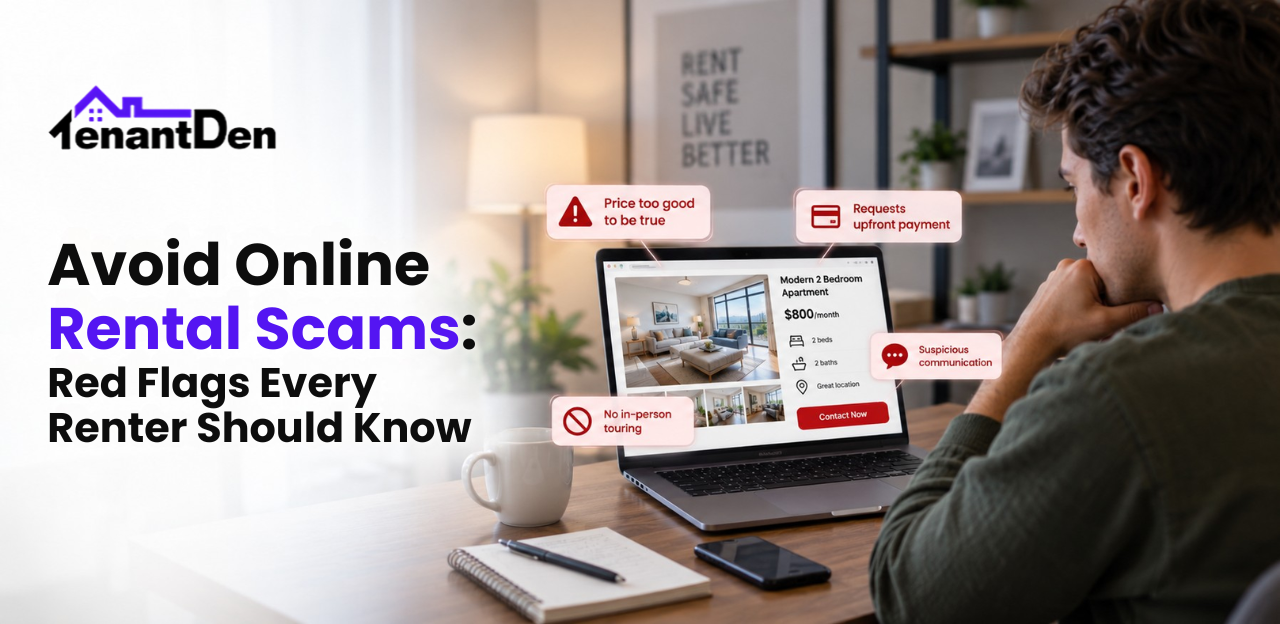
Rental scams rarely look like scams at first. They look like a great place at a fair price, posted by an owner who replies fast. That's exactly why they work.
The numbers back this up. The FBI's Internet Crime Complaint Center (IC3) received 12,368 real estate fraud complaints in 2025, with reported losses of $275.1 million, up from about $173 million in 2024. IC3 counts financial loss from fraud involving rental or timeshare property as real estate fraud, so rent scams sit right inside that figure.
Below are 12 red flags that keep showing up in real estate scams aimed at renters. We've also added a section for landlords and property managers, because rental fraud costs them money too.
The following are some:
Scammers price low to get lots of replies fast. The FTC warns that rent a lot cheaper than most rents in the area could be a sign of a scam.
Before you reach out, compare three or four similar units in the same ZIP code. If one listing is much cheaper and nothing explains it, slow down.
Copy the full address into a search engine.
An FTC consumer education specialist advises that if the same address shows up in another rental with a different price or different landlord contact details, that's a sign of a scam. If the home is listed for sale instead of for rent, that's also a big red flag.
Scammers copy the pictures, description, or virtual tour from a real listing, swap in their own contact details, and post the fake ad on a new site.
Run the photos through a reverse image search like Google Lens. If they show up on an old listing or a real estate agent's page, walk away.
The following are some:
Out of town, overseas, too busy. The excuse changes, but the result doesn't. The FTC's advice is simple: don't pay for a property you've never seen, and never pay someone you've never met in person. If you can't visit, send someone you trust.
Be careful with video, too. IC3 logged 22,364 AI-related complaints tied to $893.3 million in losses in 2025. A prerecorded tour proves nothing. Ask for a live video call and have the person open a specific closet or step outside to show the house number.
Three other people want it. Send the deposit by tonight. Urgency stops you from checking facts. The FTC says if anyone pressures you to make a decision quickly, walk away.
A real owner or manager can prove it.
The FTC notes rental agents should carry photo ID badges from the company that owns or manages the property, and suggests looking for a sign at the rental with the owner or manager's name, then calling that company before you make a deal.
You can also check your county's property records to see if the owner's name matches. Then search the company's name with words like review, complaint, or scam.
Many apartment scams start on a real platform and then shift to text, WhatsApp, or a personal email. Once you leave the site, you lose its protections and its records. The FTC recommends applying through the rental company, a licensed real estate professional, or the listings website.
The following are some:
How someone wants to get paid tells you a lot.
|
Payment method |
Risk level |
Why it matters |
|
Wire transfer (Western Union, MoneyGram) |
High |
Works like cash; rarely reversible |
|
Gift cards |
High |
A legitimate landlord won't ask for these |
|
Cryptocurrency |
High |
Hard to trace and recover |
|
Payment apps (Zelle, Cash App, PayPal, Apple Pay) |
High for strangers |
Built for people you know |
|
Credit card |
Lower |
Offers the strongest dispute rights |
The FTC lists gift cards, wire transfers, payment apps like Apple Pay, Cash App, PayPal and Zelle, and cryptocurrency as the methods scammers prefer, and says a credit card gives you the best protections.
A deposit to hold a unit you haven't seen is one of the most common rent scams. Pay nothing until you've toured the home, verified the owner, and read a written lease.
A new processing fee appears. Then a key fee. The FTC tells renters to ask the agent to confirm, in writing, any fees they'll have to pay on top of rent. If they won't, that's your answer.
The following are some:
Some rental scams aren't after your deposit at all. Scammers may ask for your Social Security number, a picture of your driver's license, and pay stubs, then use that information to steal your identity.
Share sensitive data only through a secure screening portal, and only after you've verified the listing and the owner.
The FTC warns that a scammer might ask for screenshots of your credit scores, when the real goal is to get you to enroll in a paid credit monitoring program with recurring fees. Real landlords run screening through a proper tenant screening service. They don't send you links to sign up for something.
TenantDen was built to close the gaps that rental fraud depends on:
Rental scams keep changing, but they all need the same thing from you: money or data before you've verified anything. Take that away, and most rent scams fall apart.
Ready to search safely?
Browse verified homes on TenantDen, or list your property for free today.