How COVID-19 has affected the Rental Market?
09/21/2021
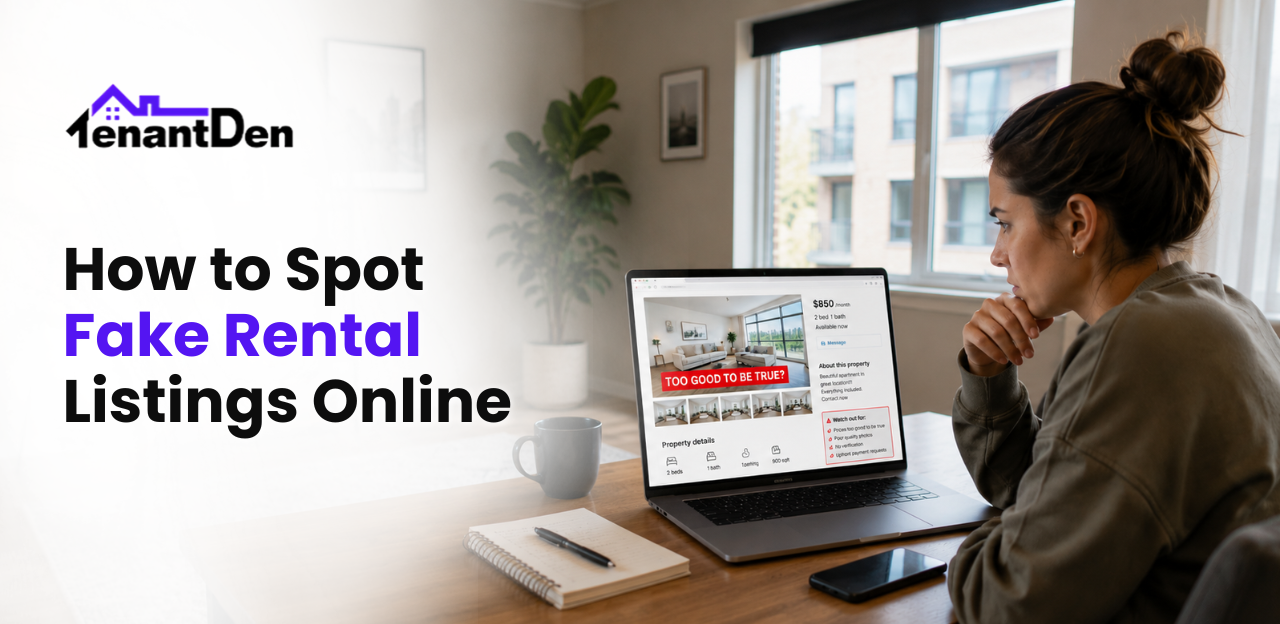
You find the perfect apartment on a classifieds site. Then the "landlord" asks you to wire the deposit immediately, and your stomach drops a little. That instinct is worth trusting. Finding a decent place to live is hard enough without adding digital deception into the mix, and right now renters are dealing with more of it than ever. Protecting your savings starts with knowing how to spot fake rental listings online.
The FBI's own numbers show how much this has grown: real estate fraud complaints surged in 2025, with over $275 million lost. This isn't broken-English emails from overseas anymore. AI lets scammers clone real property photos, fake a convincing voice recording, and draft a fake lease in seconds.
A student hunting for a first apartment, a family relocating cross-country- doesn't matter who you are, a real estate scam can wreck your finances either way. Here's what's ahead: the red flags, what the 2026 housing rules actually change, and where TenantDen fits into all of it.
Protecting your money starts with knowing how these criminals actually work. A modern real estate scam usually isn't obvious. Fraudsters use a trick called listing hijacking: find a home that's genuinely for sale, download the high-res photos, and repost them as a rental on a classifieds site.
The photos look great because they're real, just stolen, so renters fall for the place fast. Then comes the urgency: ten other applicants, supposedly, all ready to sign. Sign the fake lease, wire the deposit, and the person doing the pressuring disappears before anyone realizes the actual homeowner never intended to rent the place out at all.
Spotting the trap before you make contact is the best way to stop property fraud. Panic and urgency are the tools scammers use on purpose. These five signs cover most of it.
A newly renovated three-bedroom listed at half the going rate for that neighborhood is almost always a trap.
The low price is the bait; it pulls in interest fast and rushes people into deciding before they've thought it through.
A classic scam signal: the "landlord" can't meet in person. Missionary work, deployed overseas, a sudden family emergency- the excuse changes, but the task is the same: drive by and peek through the windows because they took the keys with them.
A real landlord or property manager gets you inside.
A legitimate property manager wants a background check before anything else; they need to know you're a reliable tenant. A scammer just wants the cash.
Pressure to pay a holding fee or sign a lease within an hour of your first conversation? That's not urgency; that's a criminal working fast before you think it through.
The payment method tells you almost everything. Wire through Western Union or send crypto, and that money's gone; reversing either one is next to impossible.
A deposit demand through Zelle, gift cards, or crypto before you've even seen the property in person? Walk away.
Nobody loves paying an application fee, but a landlord who doesn't care about your credit score or rental history at all is a red flag on its own.
Scammers skip the background check because speed is the whole point; they need the deal closed before you catch on.
Listing clears the first look? Dig deeper anyway. Spotting a fake listing online usually comes down to a bit of research the ad itself won't hand you.
Drop the listing's main photo into Google Reverse Image Search. If it turns up on a real estate site under a different agent's "For Sale" listing, you've found your scam.
Property ownership is public record, so pull up the county tax assessor's site and search the address. The name on file should match whoever's asking you for rent. If it doesn't, that's not a technicality; that's the scam.
Don't put it on a PDF application or send it over plain email. Anything sensitive goes through an encrypted, verified property management portal, nowhere else.
Regulators are paying more attention too, even if the law hasn't fully caught up yet.
The FTC opened proceedings in early 2026 targeting deceptive junk fees in rental housing, an early step toward requiring landlords to disclose admin fees, pet fees, and application costs upfront, worth watching even before it's finalized.
Meanwhile, scammers keep tacking on hidden fees right before you're set to pay.
A growing number of states cap security deposits too, commonly at one to two months' rent. A landlord asking for three months up front to "prove you're serious" is either breaking the law where a cap exists, or running a scam regardless.
Renters need a way to trust a listing. Landlords need a way to prove they're legitimate without exposing themselves to synthetic identity fraud. One verified platform handles both, which is why sticking to listings on TenantDen cuts your risk substantially.
TenantDen is a rental property management platform built specifically to remove the vulnerabilities scammers depend on.
Here's what that looks like in practice.
Landlords get real protection here, not just a promise. TenantDen integrates with TransUnion SmartMove for FCRA-compliant credit reports and criminal background checks pulled straight from the bureau, so an AI-generated pay stub or forged document doesn't get anywhere near a lease decision.
Listing a property costs nothing, which removes the reason a legitimate owner would compete for space on the same shady classifieds sites scammers use. And once you've found a real tenant, the lease itself gets signed digitally inside the platform instead of on paper that's easy to alter or lose track of.
Tenants can message the landlord directly through the portal before committing to anything, no anonymous middleman standing between them. And every account runs behind two-factor authentication, which closes off one of the more common ways a scammer gets into someone's email and hijacks a conversation in the first place.
The rental market moves fast, and that's exactly what scammers are counting on. Slow down anyway.
Run the reverse image search. Pull the tax record. Ask for real screening instead of a promise. Those three habits catch most fake listings before they cost you anything.
If you're a landlord, list somewhere that verifies both sides instead of trusting whoever shows up first. If you're a renter, a little skepticism up front is cheaper than a wired deposit you'll never see again.